Welcome to Henan Zhongyide Intelligent Technology Co., LTD

Welcome to Henan Zhongyide Intelligent Technology Co., LTD

Grinding mill
CONTACT US
DATE:2026-10-16 VISITS:0
Ground Calcium Carbonate (GCC), commonly known as heavy calcium, is produced by crushing and grinding natural carbonate minerals, including calcite, marble, and limestone. The primary component of GCC is calcium carbonate CaCO3, and its purity level is the key factor determining the selection of milling equipment and its final industrial applications.
For high-quality industrial-grade Ground Calcium Carbonate (GCC), the CaCO3 content is typically required to be above 98%. A higher purity level makes it exceptionally well-suited for fine and deep processing applications.
The second factor defining GCC applications is the impurity content. Iron(III) oxide is the primary culprit affecting whiteness, which must generally be restricted to below 0.2%; excessive iron leads to a yellowish and dull appearance. Magnesium oxide should be strictly controlled within 1%, as higher levels impair thermal stability during plastics processing. Additionally, elevated silicon dioxide SiO2 accelerates mechanical wear during grinding, requiring it to be kept below 0.2%.
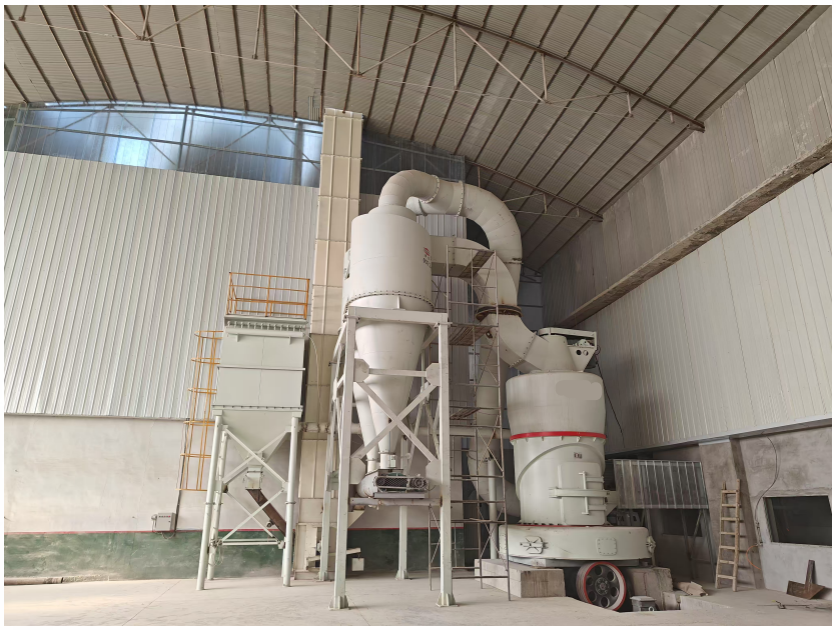
Currently, the leading equipment for GCC processing includes Raymond mills, European-type coarse powder mills, vertical roller mills (VRM), ultra-fine vertical roller mills, ultra-fine ring-roller mills, and ball mills. Equipment selection should be comprehensively determined based on the target application, GCC quality, and required production capacity. For instance, in the building materials sector, European-type 178 mill is ideal for producing 80–325 mesh GCC powder with a capacity of around 15 tons per hour (t/h). However, if the hourly output exceeds 30 tons, a vertical roller mill becomes far more economically viable. For ultra-fine powder above 800 mesh, either an ultra-fine ring-roller mill or an ultra-fine vertical roller mill can be deployed, depending on the production scale and the required sub-2-micron content. When a ball mill is selected for ultra-fine processing, an external air classifier system must be integrated to grade and screen the ground fine particles.
/ 86+13838200416
( Telephone )